
Formula & Recipe Management
Connect machines and industrial devices using PLC, Modbus, OPC, SCADA and IoT interfaces to capture real-time shop-floor data.
A connected manufacturing platform that brings machines, PLCs, SCADA, sensors, IoT devices and ERP together—giving production and management real-time visibility into performance, downtime, quality and factory operations.
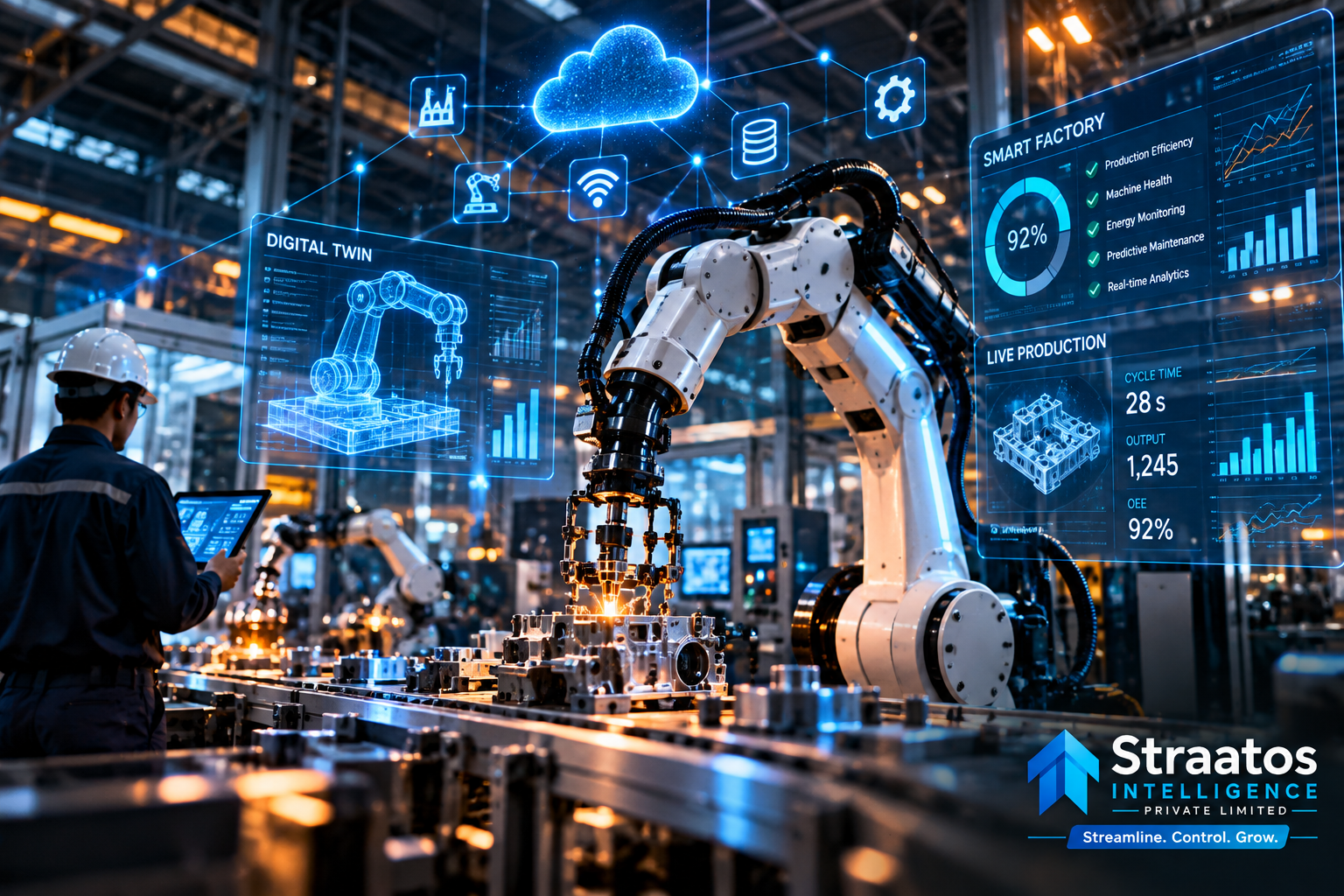
Connect machines, PLCs, SCADA systems, sensors, edge devices and ERP while maintaining real-time visibility of production, machine status, downtime, quality and process parameters on one integrated platform.
Connect machines and industrial devices using PLC, Modbus, OPC, SCADA and IoT interfaces to capture real-time shop-floor data.
Monitor runtime, idle time, breakdowns, cycle data, production counts, speeds, temperatures, pressures and other critical process values in real time.
Analyze OEE, availability, performance, quality, downtime causes, process deviations and machine trends for faster operational decisions.
A connected workflow keeps commercial, material, production, quality and dispatch activities aligned throughout the job lifecycle.
Capture customer requirements, quotations and orders accurately.
Connect PLCs, controllers, sensors, SCADA systems and industrial equipment using secure industrial communication interfaces.
Convert live machine data into structured production signals, states, events and KPIs for real-time factory monitoring.
Monitor machine status, production output, cycle times, process values, downtime and line performance from centralized dashboards.
Measure OEE, runtime, idle time, breakdowns, performance losses and downtime reasons to identify bottlenecks and improvement opportunities.
Trigger alerts for abnormal conditions and connect machine events with ERP production, maintenance, quality and management workflows.
Use machine and production data to support maintenance, quality, planning and management decisions across the connected factory.
Connect real-time shop-floor data with ERP, MIS and analytics for unified operational and management visibility.
Bring machines, PLCs, SCADA, sensors, IoT, production systems, maintenance, quality, ERP and management analytics together on one connected platform.
Create project estimates and quotations with dimensions, specifications, scope, terms and approval workflows.
Capture machine signals, counters, process parameters and production states continuously for accurate, time-stamped operational visibility.
Monitor lines, cells, machines and work centres with live status, production output, utilization and performance indicators.
Correlate process parameters and machine conditions with production and quality data to identify deviations earlier.
Use runtime, alarms, conditions and machine history to strengthen preventive and condition-based maintenance decisions.
Maintain production and event traceability with machine, timestamp, parameter, batch, order and operator context where available.
Control pack sizes, filling, labels, batch identification, packed stock and dispatch readiness.
Use dashboards and operational insights for faster management decisions.
Create one connected, scalable digital manufacturing environment from the shop floor to management.
Automate workflows and reduce manual tasks for smoother operations.
Maintain standards with built-in quality checks and controls.
Improve resource utilization and reduce operational waste.
See job, process and operational status across the workflow.
Support growth with a connected and extensible ERP platform.
Modern factories need more than standalone machines and isolated dashboards. Straatos connects industrial equipment, PLCs, SCADA, IoT and enterprise systems so production teams and management work from the same real-time operational data.
Track machine states, production events, alarms, downtime, process parameters and KPIs across the factory in real time.
Give management a clear view of machine utilization, OEE, downtime, production output, process health, quality indicators and operational bottlenecks.
Digitize operational transactions and reduce dependence on manual paperwork.
Maintain structured process records with controlled system access.
Use reports and business intelligence to support operational decisions.
Connect machines, people and systems with real-time data, IoT, PLC/SCADA integration and analytics—from the shop floor to management.